Behind the scenes of green abrasives
Our journey to EPD certification
When evaluating the efficiency of an abrasive disc or grinding wheel, the primary parameters considered are removal capacity, durability and safety. Today, however, the manufacturing industry requires a new key metric: environmental impact.
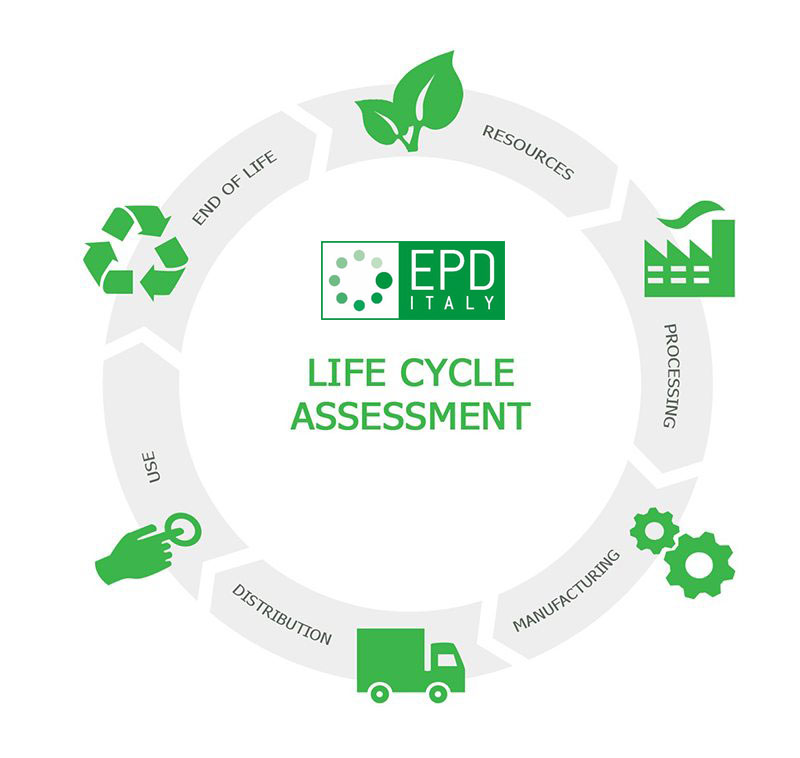
Being aware of this urgency, we have embarked on a rigorous process: the LCA (Life Cycle Assessment) study. This scientific analysis maps the entire life cycle of our products “from cradle to grave” and is the fundamental step that will soon lead us to obtaining the EPD (Environmental Product Declaration).
Here’s how we’re analysing and optimising every stage of our abrasives.
1. The choice of raw materials (cradle)
The journey to sustainability begins in the Research & Development laboratories. Analysing the LCA means evaluating suppliers not only based on material quality, but also on their environmental footprint.
- Granules: We measure the energy impact of producing corundum or silicon carbide.
- Binders: We optimise the use of structural resins to reduce emissions of volatile organic compounds (VOCs).
- Supports We favour paper, cloth or fibres sourced from controlled and responsible supply chains.
2. Production process: focus on efficiency
The internal transformation phase is the primary focus of our consumption monitoring. Every kilowatt-hour of energy and every gram of waste counts.
- Heat recovery: We use heat recovery systems from process flows to reduce the plant’s overall energy needs.
- Predictive maintenance: We constantly monitor the efficiency of motors and pressing systems to eliminate unnecessary consumption peaks.
- Flow planning: We optimise processing cycles to minimise machinery downtime and eliminate energy consumption due to standby.
- Air filtration: Latest-generation extraction systems eliminate the dispersion of fine particles into the atmosphere.
3. Smart logistics and packaging
An environmentally friendly abrasive must travel lightly and safely, reducing the impact of packaging materials.
- Environmentally friendly packaging design: We optimise the size and geometry of packages to eliminate empty spaces and reduce the overall amount of packaging material.
- Plastic reduction: We minimise the use of disposable plastic films and unnecessary protection in secondary packaging.
- Load saturation: We optimise shipments to reduce the number of trips and related CO2 emissions.
4. Use in our customers’ workshops
A higher-quality abrasive lasts longer. The longer the disc lasts, the fewer replacements are needed to complete a job. This directly translates into:
- Less waste for the user to dispose of.
- Reduced machine downtime.
- Optimised energy consumption during grinding or finishing operations.
5. End life (grave)
What happens when the abrasive is used up? The circular economy challenge in our industry is complex due to the composite nature of products. The data we are collecting with the LCA will guide us in the development of increasingly separable supports, facilitating material recovery and reducing the amount sent to landfill.
Towards the EPD: why move early?
Starting the LCA study before formally obtaining the Environmental Product Declaration (EPD) demonstrates our concrete commitment. We’re not waiting for sustainability to become mandatory; we’re integrating it into our corporate vision today. Soon, the publication of the official EPD will provide our industrial partners with data certified by third parties, essential for reducing the carbon footprint of their supply chain (Scope 3).
Want to learn more about our sustainability journey?
Contact our technical team to find out how we’re innovating our processes and to receive early updates on the publication of our EPD certification.